
‘Being there’ is being part of the everyday life of a locality. Localities have their history, which is what happened in the past that characterises the place. Heritage is made continuously by taking part in the everyday life of a locality. Participation, taking part in activities of the everyday, binds all the things that make the locality. Without taking part, one would not know about these connections. Participation in the livescape, ‘being there’ in the everyday, allows one to know how things connect with each other in the locality, and how they clash.
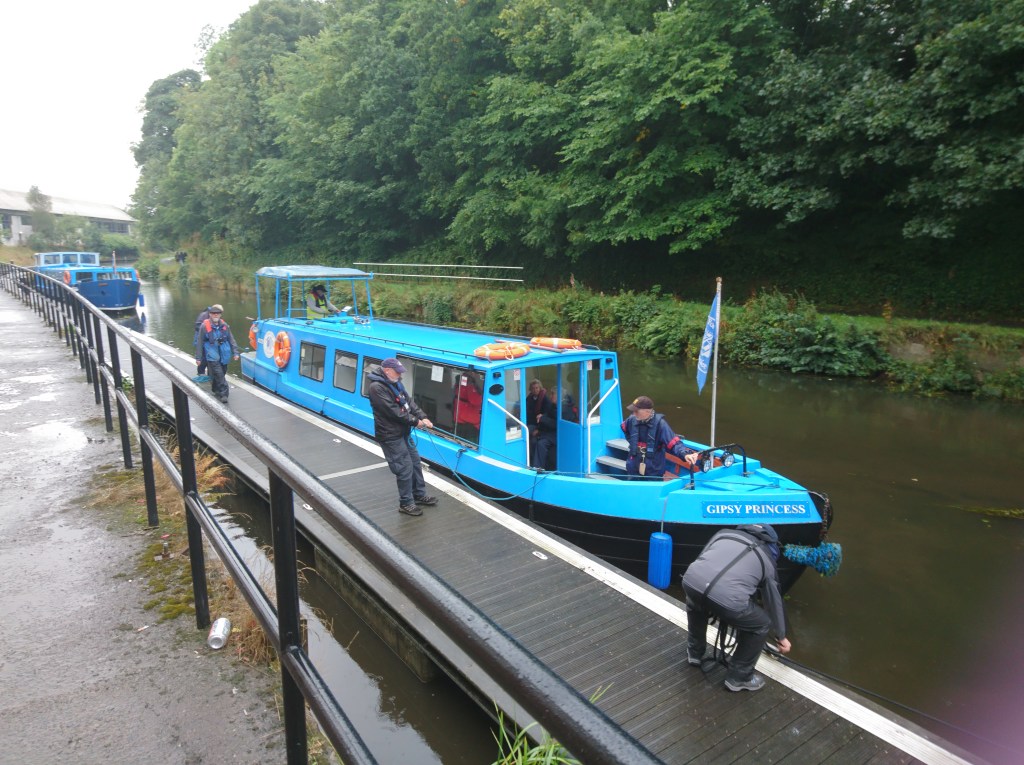
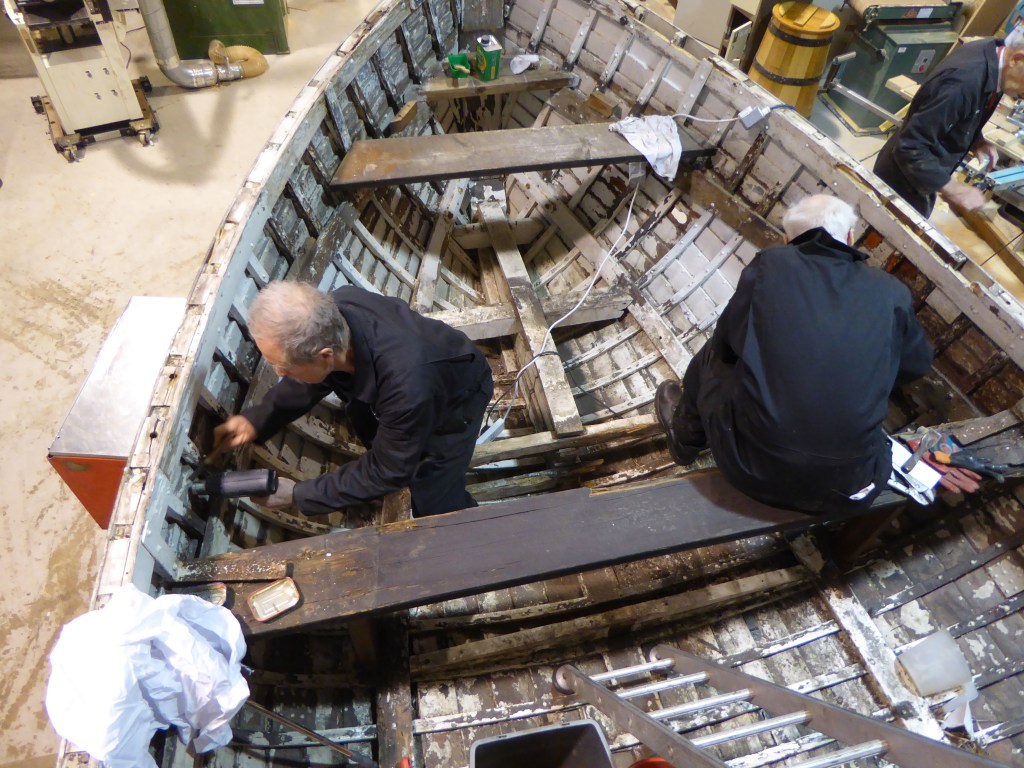
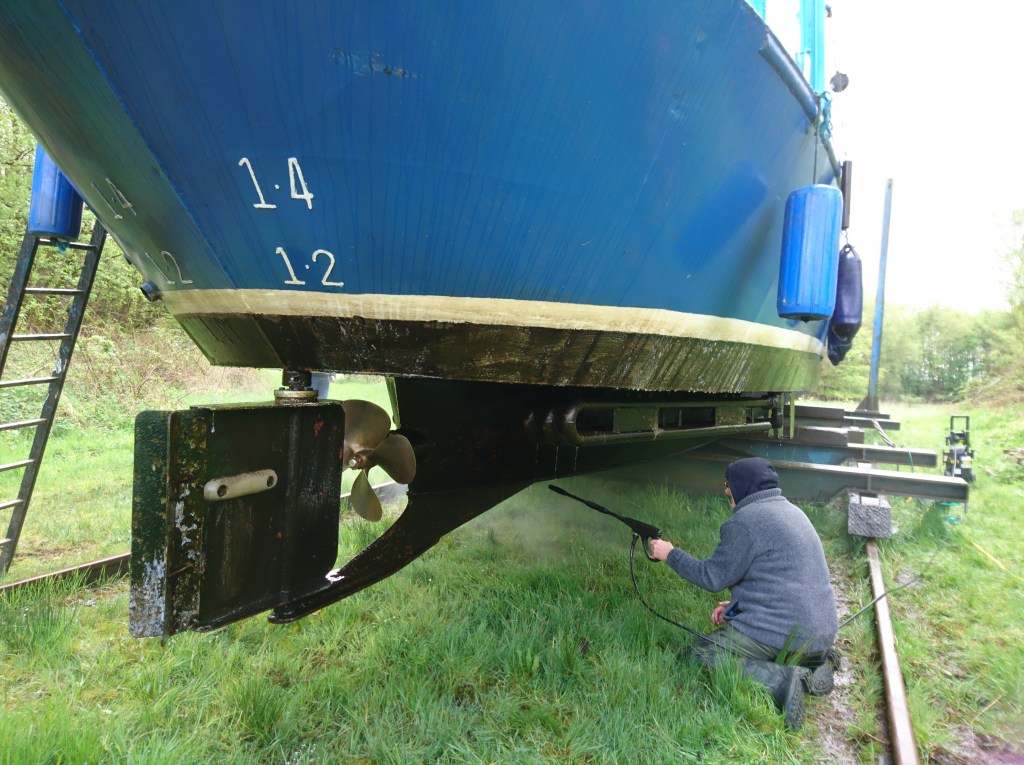
Photographs: FCCS volunteers offer free canal boat cruises during events in Kirkintilloch. Volunteers at the Clyde Maritime Trust are busy restoring an old lifeboat. FCCS volunteer power washes one of the Society's boats. The boats get regularly checked and repainted and for this reason the Society uses one an outdoor slipway. Credit: Author's own.
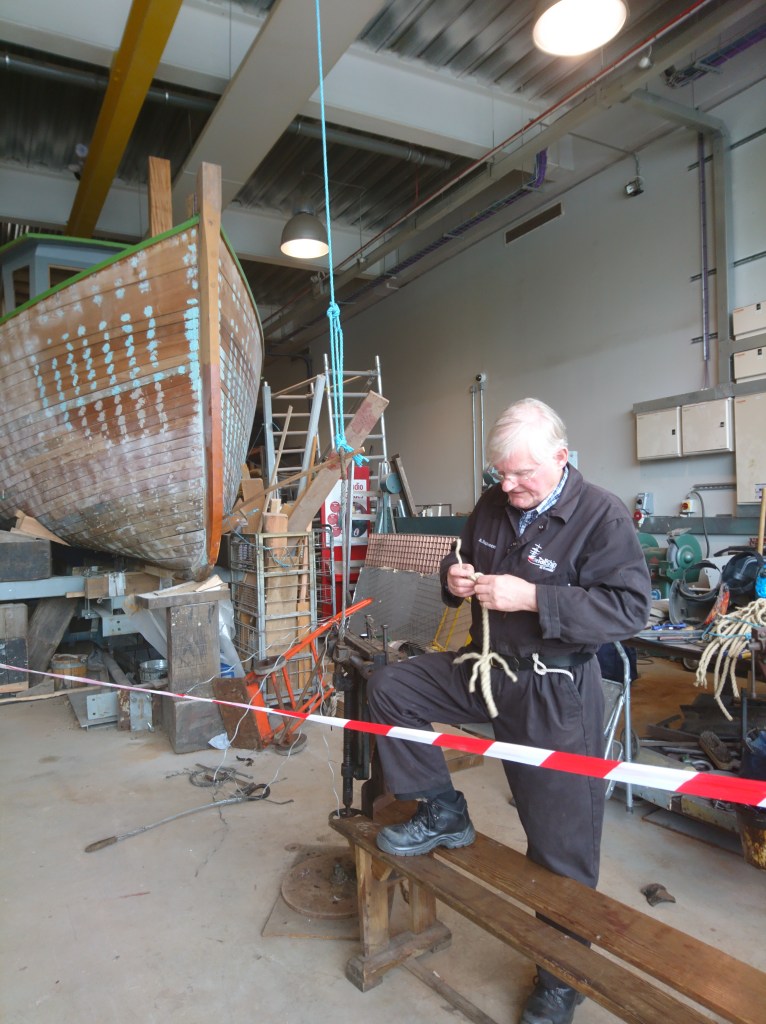
A volunteer in the CMT's workshop showcasing the traditional craft of splicing a rope at an event. Credit: Author's own.
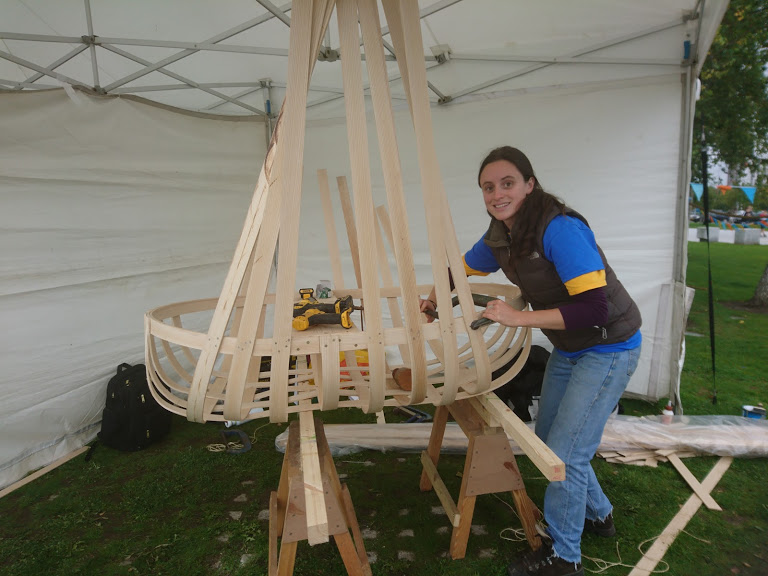
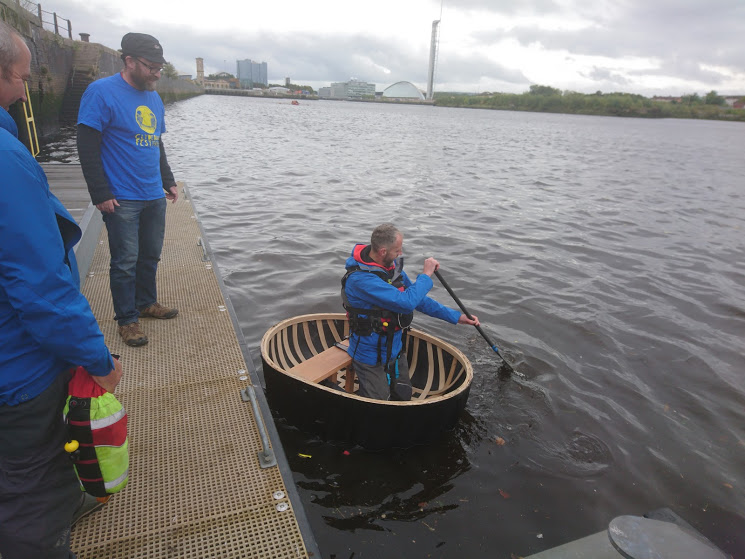
During Clydebuilt Festivals at the end of the summer, volunteers build a coracle (a small vessel made out of wood and stretched fabric) and they invite visitors to the festival to join in. Credit: Author's own.
The livescape is uncovered through taking part, by doing. When we try to learn to tie a knot on a rope to secure a boat to a mooring, we need to know about the boat, what the rope is made of, the water the mooring is in, if there are any waves, if the rope will harm any wildlife near the boat and much more information.
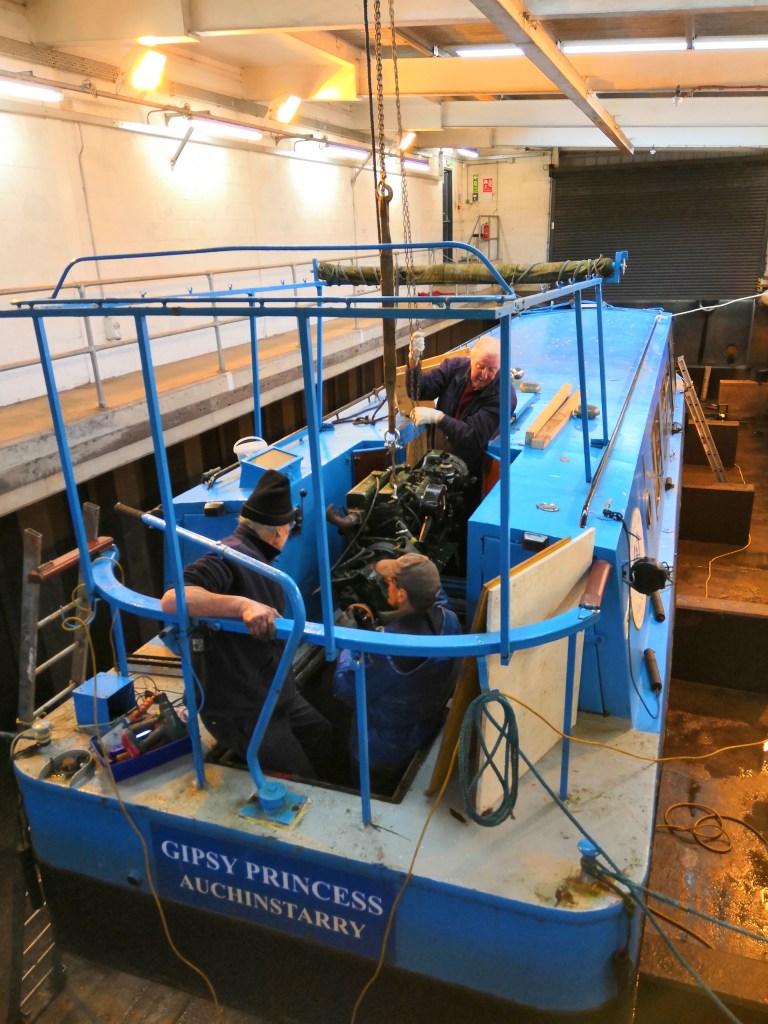
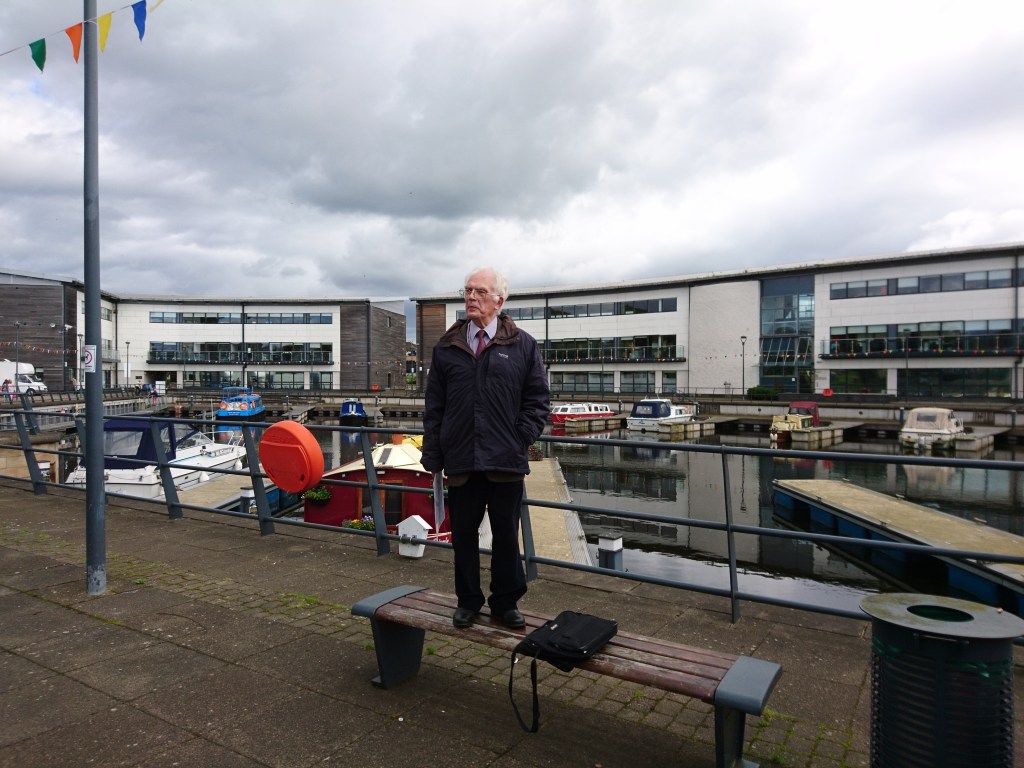
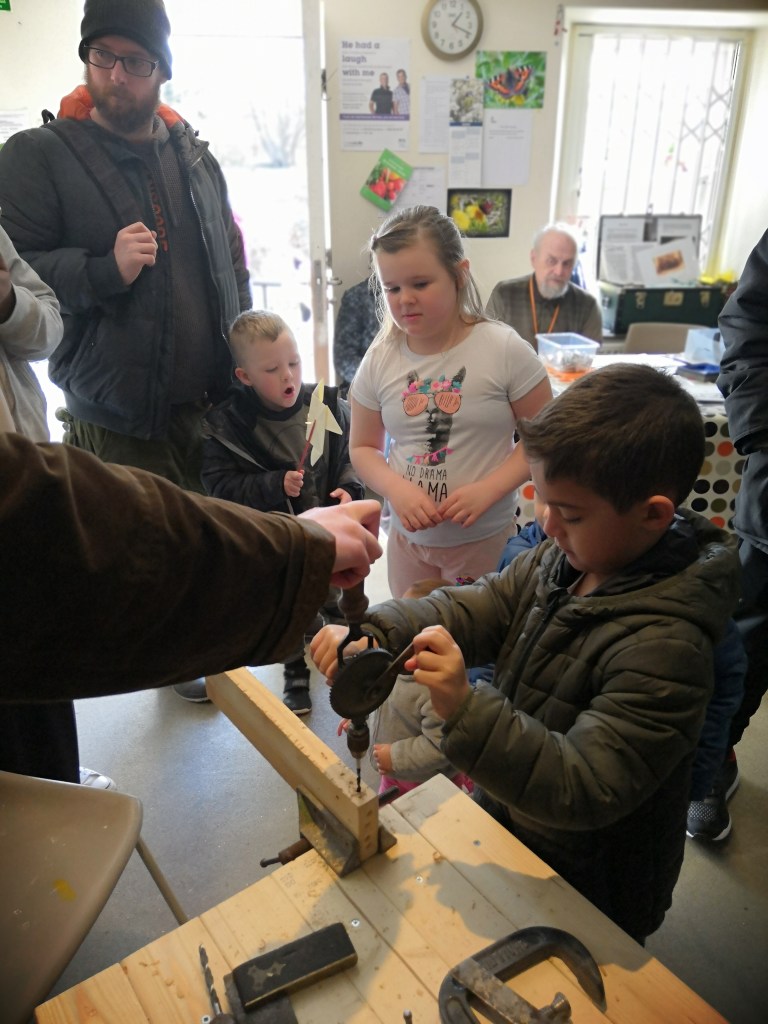
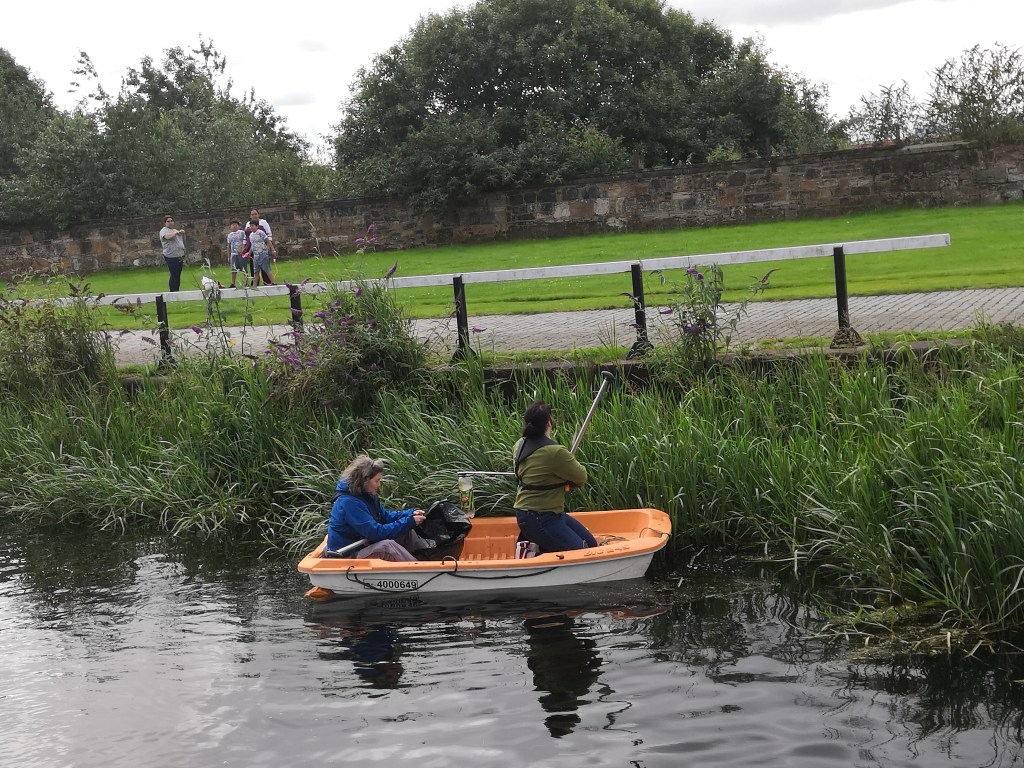
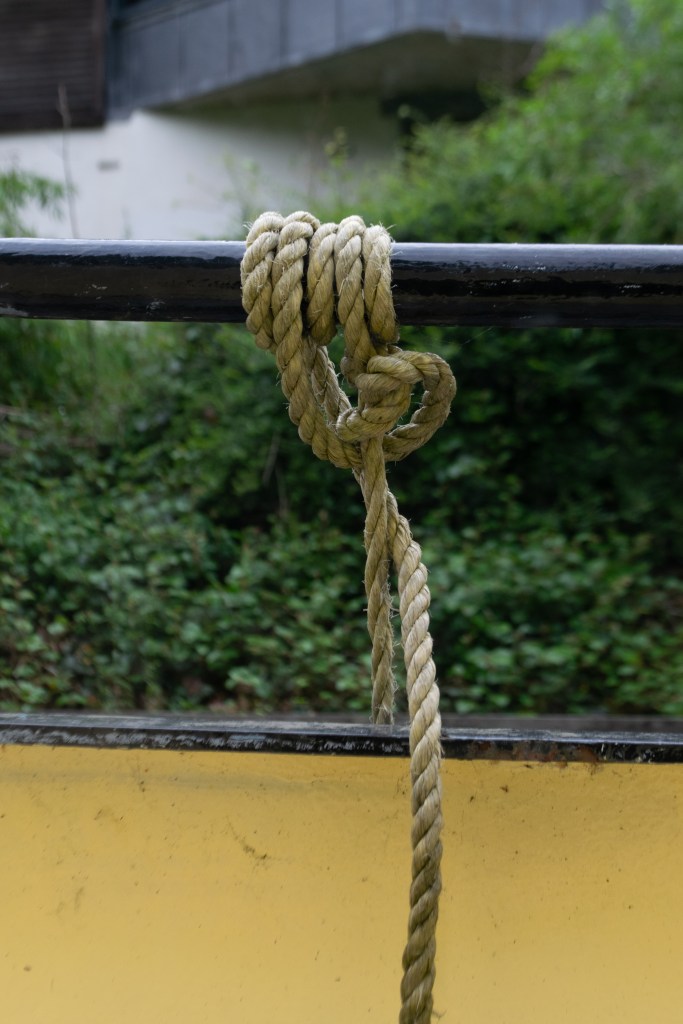
Photographs: FCCS volunteers servicing one of the boats in the Seagull Trust's boathouse. Members of heritage volunteer organisations run heritage walks for groups. Public participation in using traditional boat-building tools during an open day at Lambhill Stables. Volunteers with Scottish Canals on litter picking duties in Maryhill. Learning to tie the rope properly is part of training to navigate boats on the canal. Credit: Author's own.
This information shows that in the livescape everything connects with each other. Without trying to learn to tie a knot on a rope for a boat, one would not learn about the other things that connect the knot with the livescape.
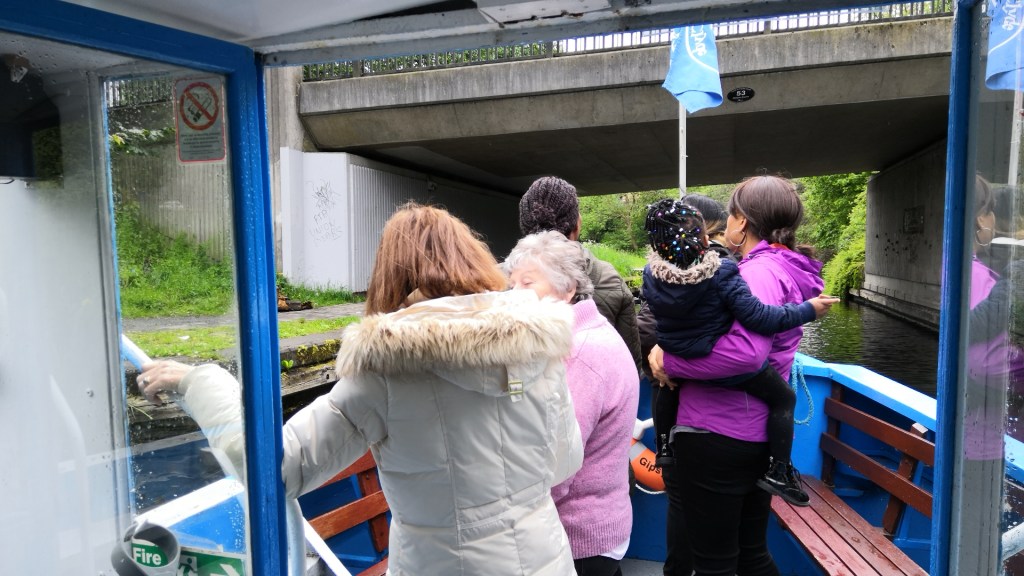
Photograph: On board the FCCS's boat for a cruise. During the case study participants had the opportunity to go on a cruise on the canal and try steering the boat themselves. Credit: Author's own.
At the same time, opportunities to participation is related to having the means to do it: not everyone has the capacity, ability, time, or resources to participate in certain activities. Boating and boat-building are expensive activities, requiring expert knowledge, specialist tools and parts, and access to a car. They are activities that can be characterised as exclusive, reserved for whoever can afford them.
 Livescape