
The purpose of the scoping study was to observe, question and survey the heritage environment, the locality and the people involved directly and indirectly with the heritage and location of the river Clyde and the Forth and Clyde Canal.
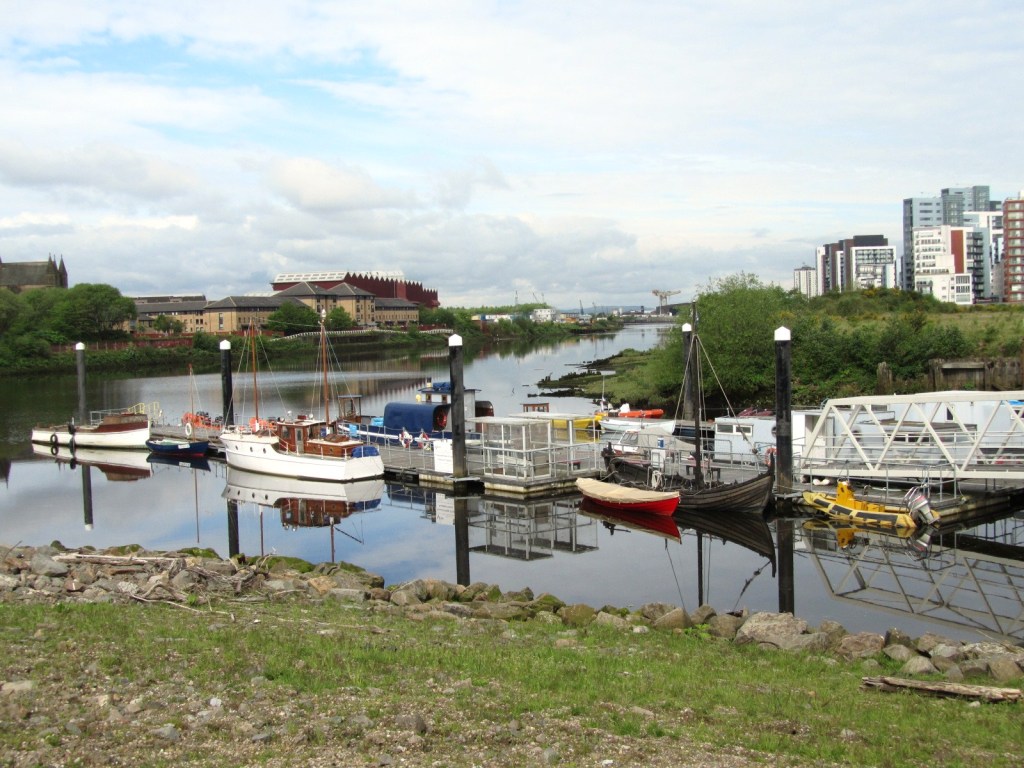
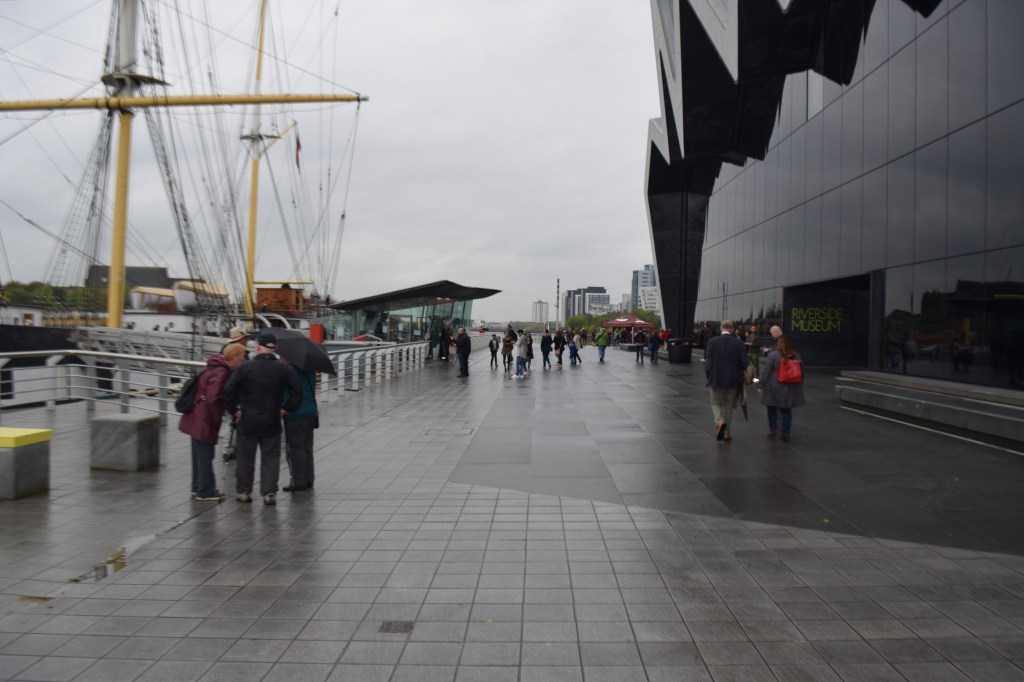
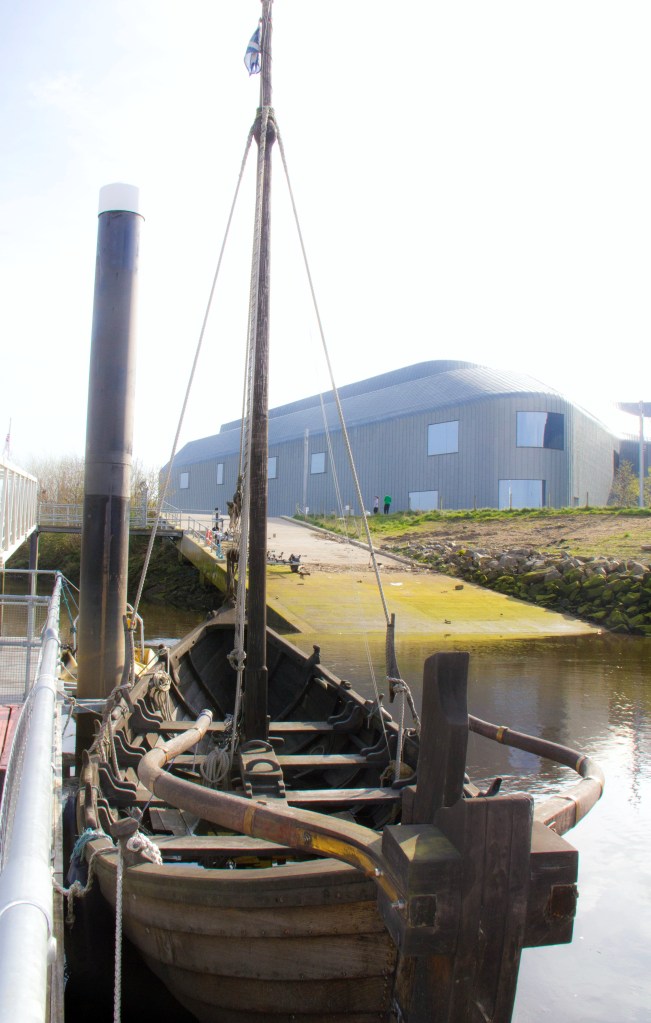
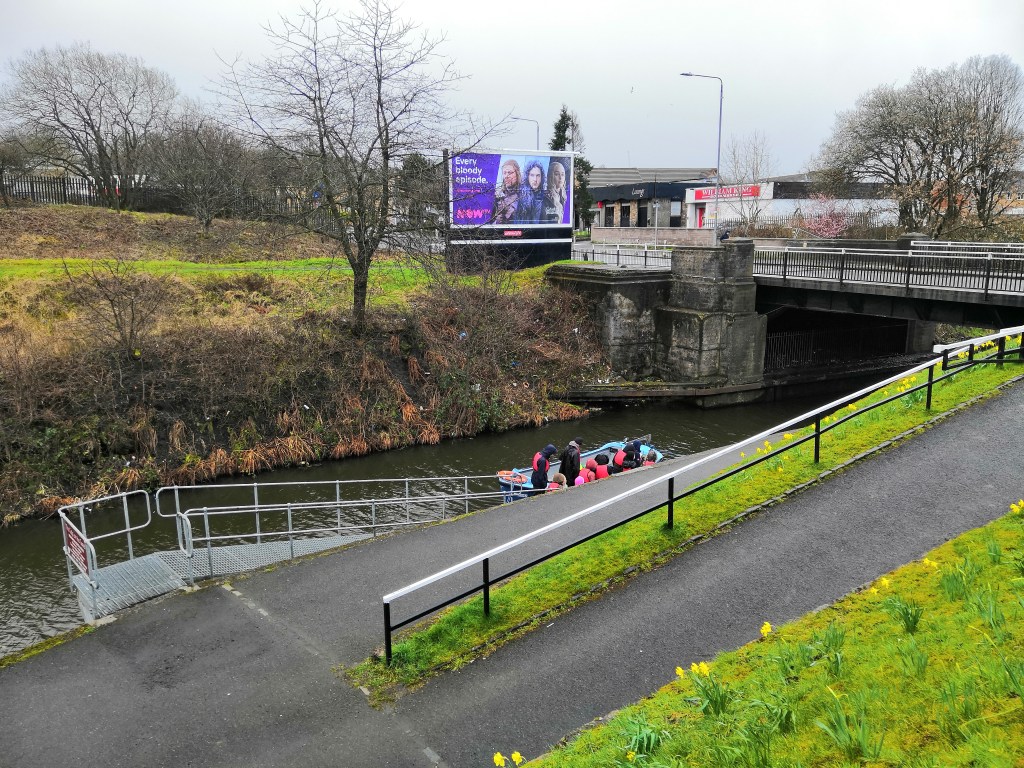
Photographs: From top left to right: Kelvin Harbor is a small harbor at the point where the river Kelvin meets the Clyde. The harbor was created after the old shipyards which were there had been transformed into the Riverside, the area where the iconic building of the Riverside Museum is located. The harbor hosts some historic vessels such as Starcrest, Ferry No8 and some others which are used for community use, such as Orcuan. It also houses the Sea Cadets, Seaforce, and the Glasgow Coastal Rowers Club. The Riverside Museum and the Tall Ship are both visitor attractions all year round. Orcuan is a boat built by members of the GalGael group to an ancient Scottish prototype, it's 30ft long, and it is an interpretation of the historic galleys. Through rowing Orcuan, members of GalGael group have been able to overcome issues related to hardship. The photos on the last row are of the Lambhill Stables' boat which was frequently used free of charge to take school children, visitors and groups during open days for short cruises along the FCC. Credits: Author's own.
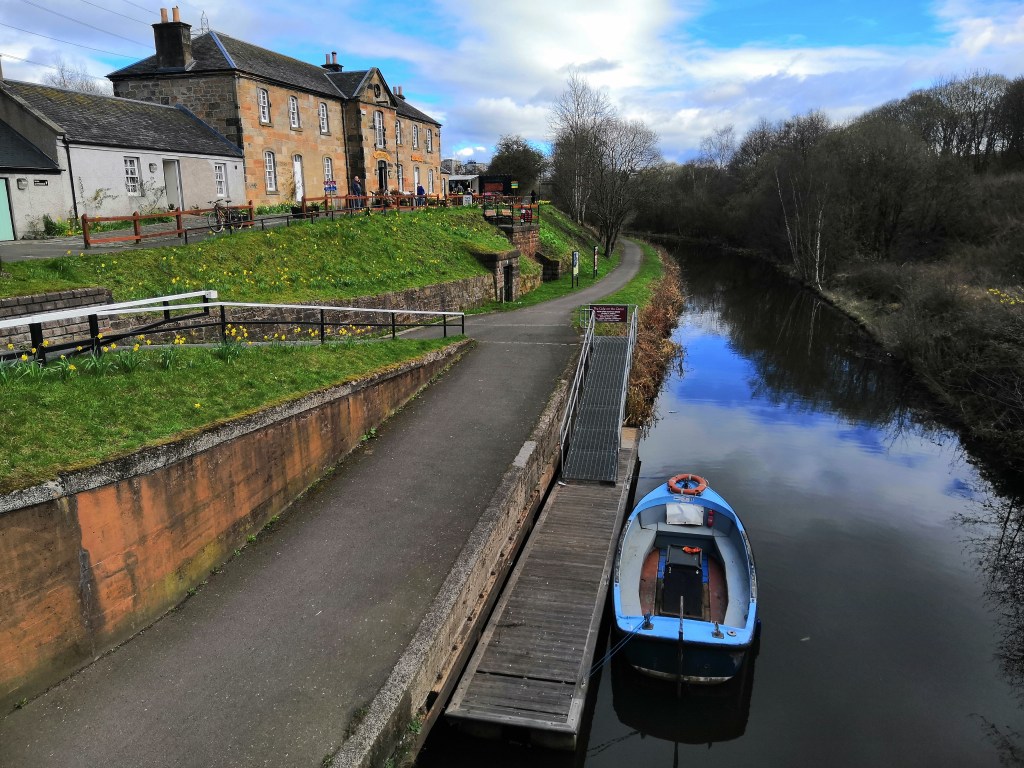
There are specific places on which the study focused. On the river Clyde, the focus of the research was on the north bank of the river and specifically the Riverside area where the Riverside Museum, the Tall Ship, and the Kelvin Harbor are located. On the south side of the river, in Govan, the research focused on a community cultural organisation GalGael. On the Forth and Clyde canal the focus for the Scoping Study was on the areas of Maryhill, Milton, Lambhill and Kirkintilloch.
All these areas have been affected by changes in the environment and the neighborhoods and they were considered by this research as transient. This is because of the changing locality experience but also because of the difficulty in engaging directly with the decision making that brought the changes.
The scoping study developed from the aims and objectives of the research and it was designed based on observations, which included consultation sessions during groups’ established activities, questionnaires, group observations, and a seminar.
Consultation Sessions
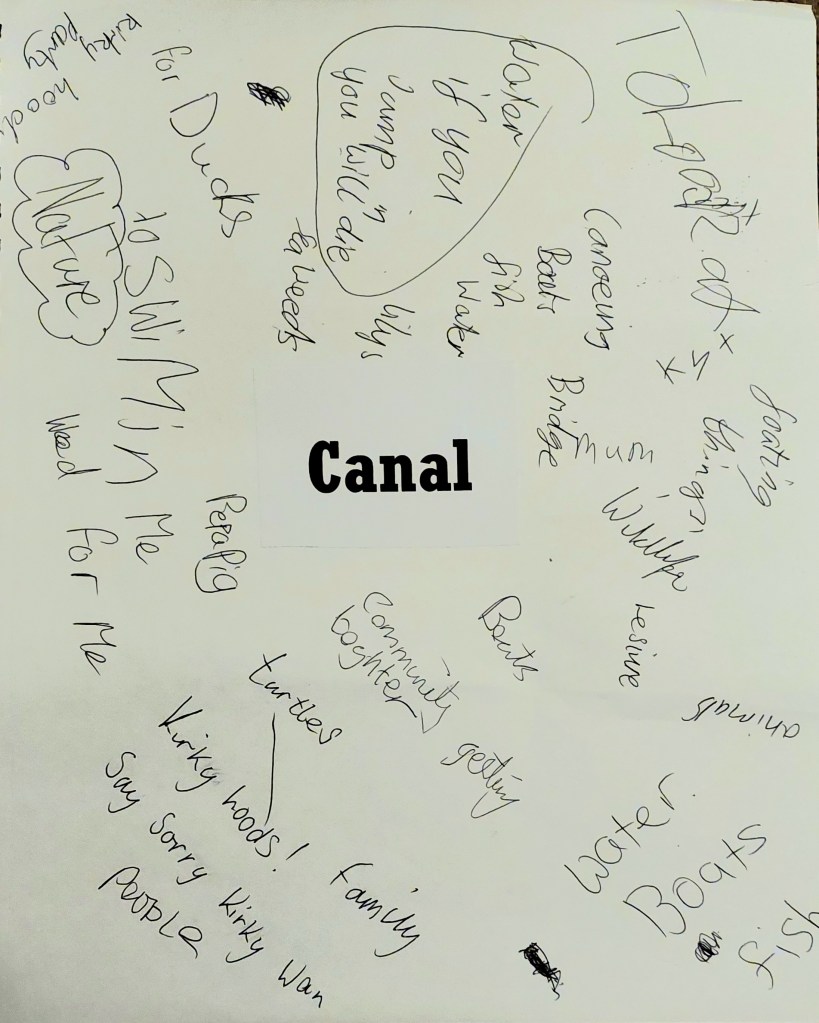
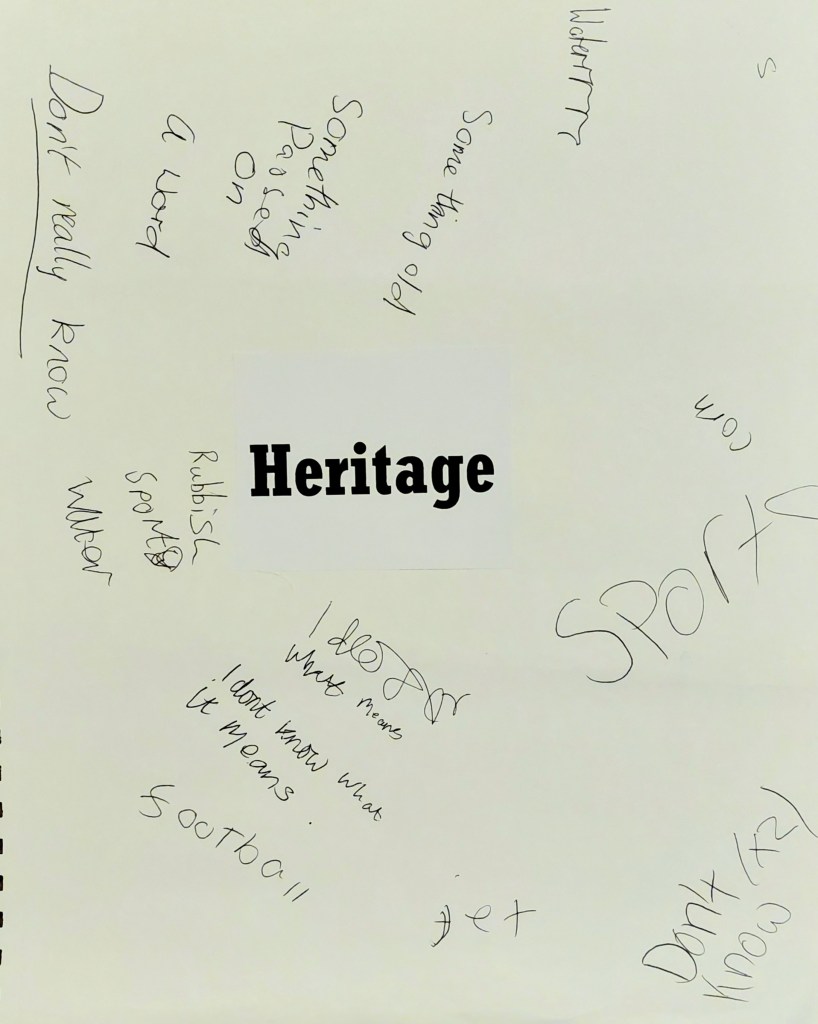
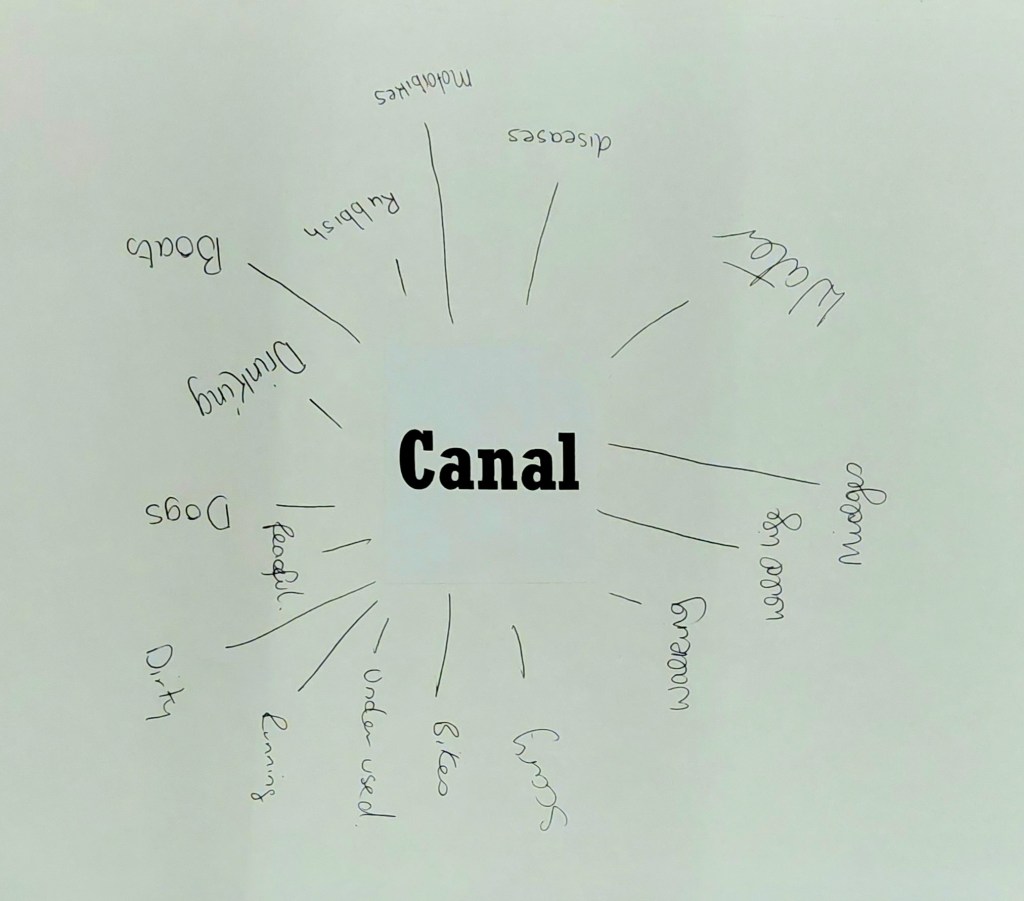
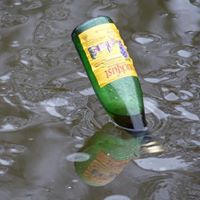
Photographs: These photos were taken from the notebook where participants to the Scoping Study made notes next to the words Canal and Heritage. Some of the answers were expected, such as 'water' or 'ducks', but there were some other answers that surprised me such as 'Don't know' for Heritage and 'diseases' for Canal. Credits: Author's own.
The consultation sessions were held in Maryhill, Lambhill Stables, and Kirkintilloch. They involved Youth clubs and women’s groups, as these groups are identified as less likely to engage with heritage (Rahim 2009).

Photograph: This is the questionnaire I prepared for the Scoping Study. The questions were not meant to be part of an interview, but rather to start a conversation. I had visited the women's group and I had a cup of tea with them during their lunch time at the center's cafe and between activities. Like in the notebook, some of the answers were surprising, such as the answer to "Describe the canal with one word: Rubbish". However, the questions also sparked conversations about fond childhood memories from the canal. Credits: Author's own.
The scoping study’s results indicated that heritage as an idea is not clear in the locality of the Forth and Clyde canal, specially in areas experiencing deprivation and difficulties in accessing services.
The researcher asked members of the Women’s Centre, over a cup of tea, what they think about the canal. Most of them grew up in the area and remembered being in it as kids during the summer. The study suggested that there is negative sentiment towards the canal (dirty, dangerous, crime area, people drowned), as there is still living memory of the canal being disused.
“Finding the local sewage hole with the pool of sewage water and swim in it in the summer. It was hundreds of us. We were poor so no money for swimming in a swimming pool. The other day, boys found dead in the canal. They were trying to cross the canal when drunk” .
Participant 1, informal conversation, Consultation session,The Women Centre, Maryhill
During the Scoping Study we were surprised by the results and the different views people had about the canal. Mixed attitudes were revealed towards this scheduled monument.
The younger participants appeared not to know much about the canal. They seem to engage primarily with the towpath.
The group of migrant women had a generally positive outlook towards the waterway. They had learned a few things about it as they had visited local museums.
Of the local women we consulted, many of them had grown up during the canal’s closure, and they remembered deaths and accidents of people they knew and they had grown up with the feeling that the canal is an unsafe area of the city, where criminal activity is likely to take place . However, they had some ideas of how the area could benefit with some changes.
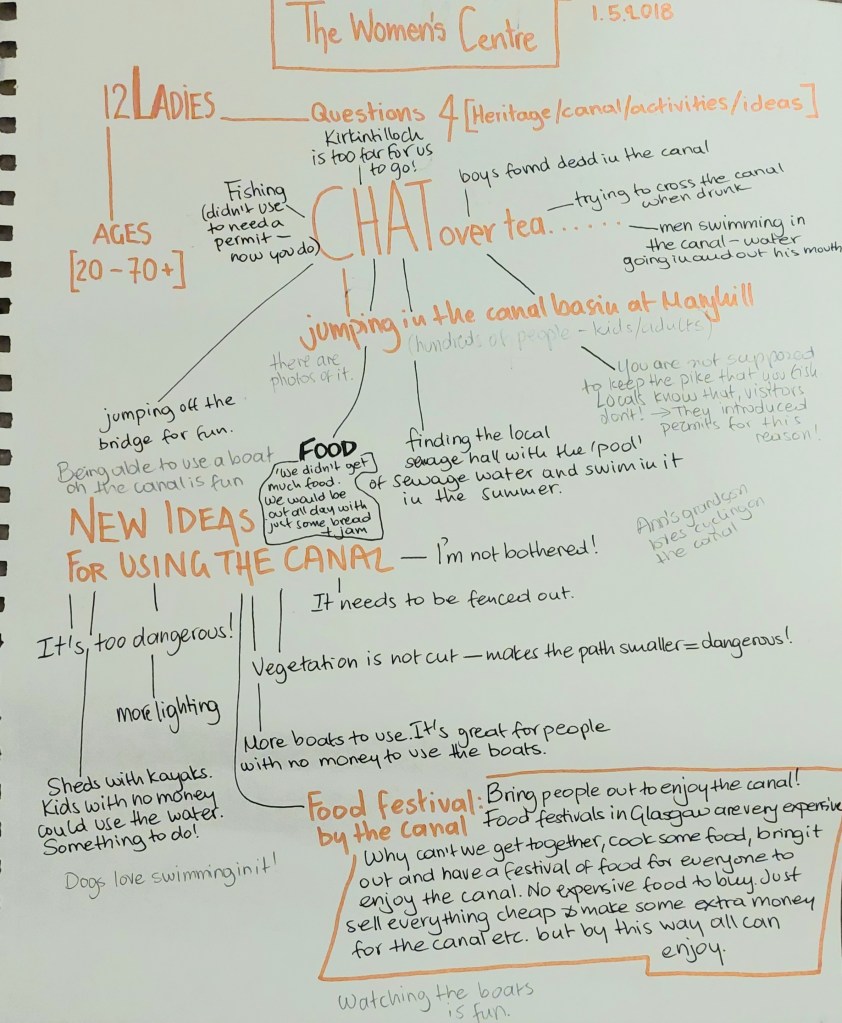
Note: this is a note from the Scoping study, from conversations with members of the Women's Centre in Maryhill. Although they thought that the canal is dangerous and needs improvement, they had their own ideas of how this could happen.
The biggest surprise during the Scoping Study was that a considerable number of participant to the study from the groups were unaware of the word ‘heritage’, some of them had never heard it before. This sparked a conversation about what the groups thought heritage could mean and participants shared their own thoughts and insights.




These are the logos of the organisations that took part in the Scoping Study: Two Youth Clubs in East Dunbartonshire Council (kirkintilloch and Harestanes), one Youth Club in Milton, one youth club in Lambhill Stables, two women's groups (MIN and The Women's Centre) both in Maryhill.
The Seminar
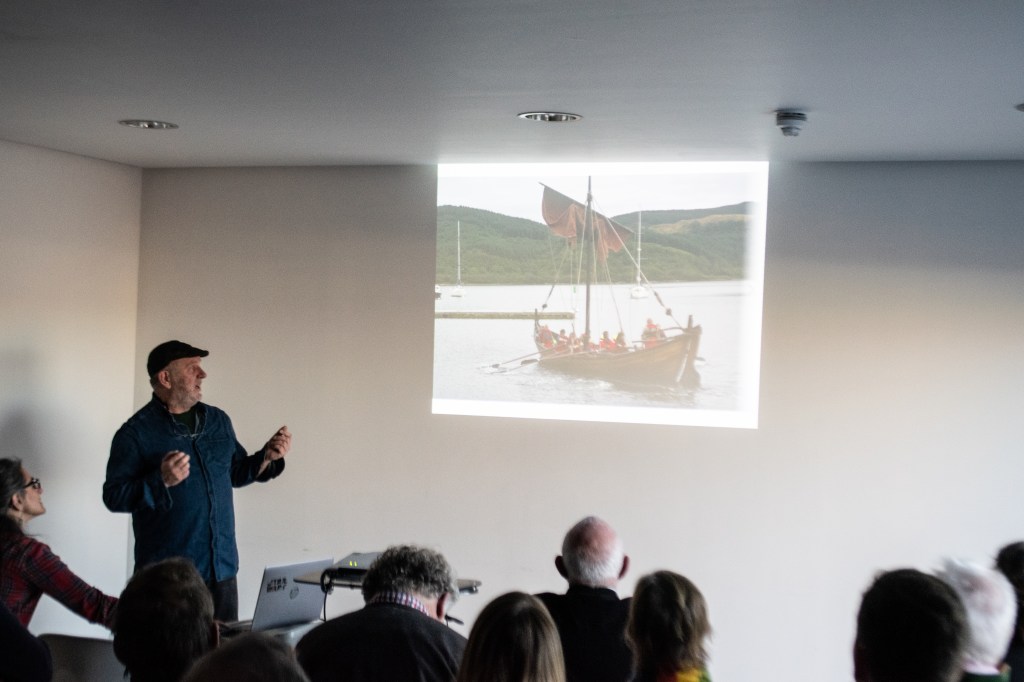
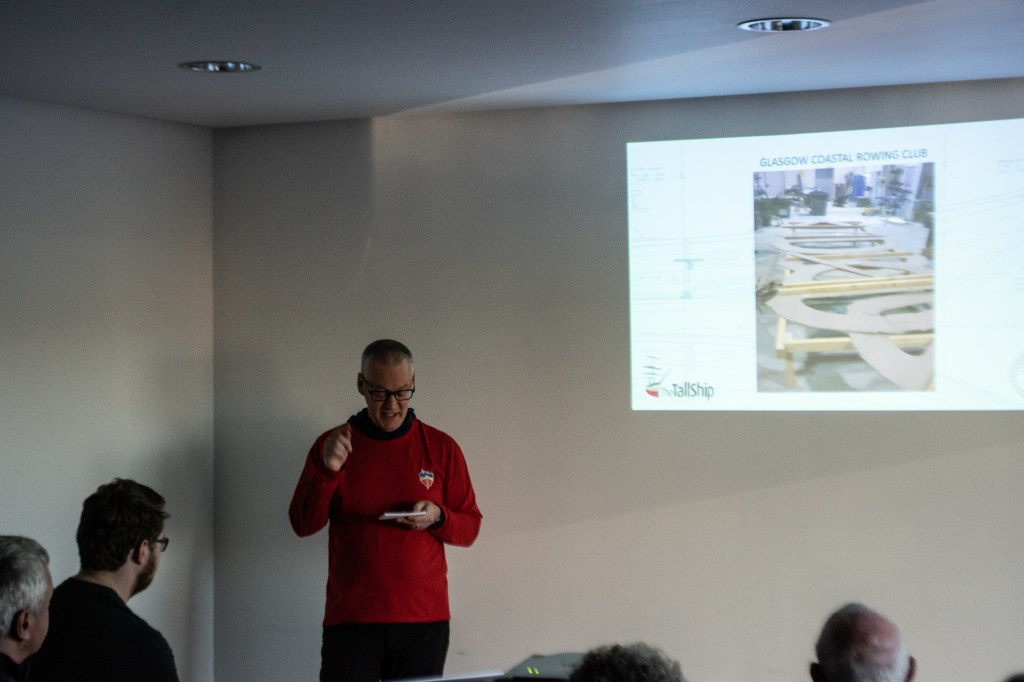
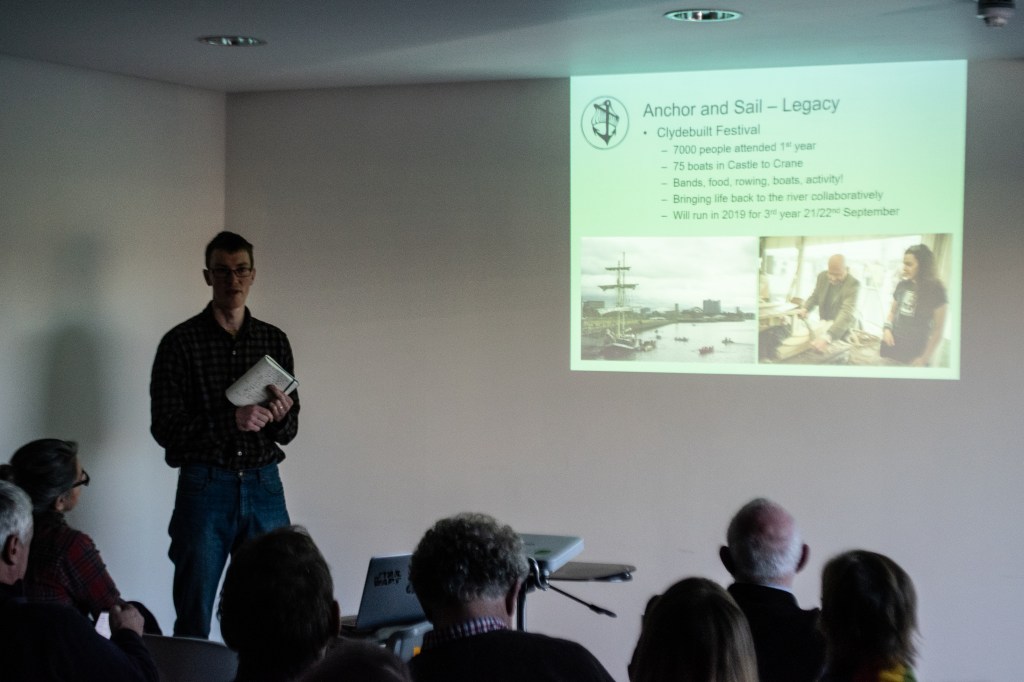
Photographs: The three speakers from the left to right, Tam McGarvey presenting the GalGael project and their work with boats helping people getting over the effects of hardship. Gordon McCracken, from the Glasgow Coastal Rowers, based on the Riverside. Ben Wylde, from Archipelago Folkschool, presenting his work at Anchor and Sale, a community heritage project based on the river Clyde, helping people gaining skills through boat building. Credit: Author's own.
During the scoping study, the researcher organised a seminar at the Riverside Museum, in December 2018. The participants of the seminar were selected to represent cultural organisations, boat-building and boating projects, which were happening at that time on the river Clyde and the Forth and Clyde canal. The aim of the seminar was to focus on small boats and their value in the locality of the waterways, the ways people interact with them and the benefits they offer. The seminar also looked at the collective efforts that exist or could potentially exist in supporting boating and boat-building activities. Participants at the seminar agreed that, at that time, there are no suitable buildings or venues to support small boat building projects on the Forth and Clyde canal and the only ones on the Clyde are the Tall Ship and GalGael, which at that time operated part time.
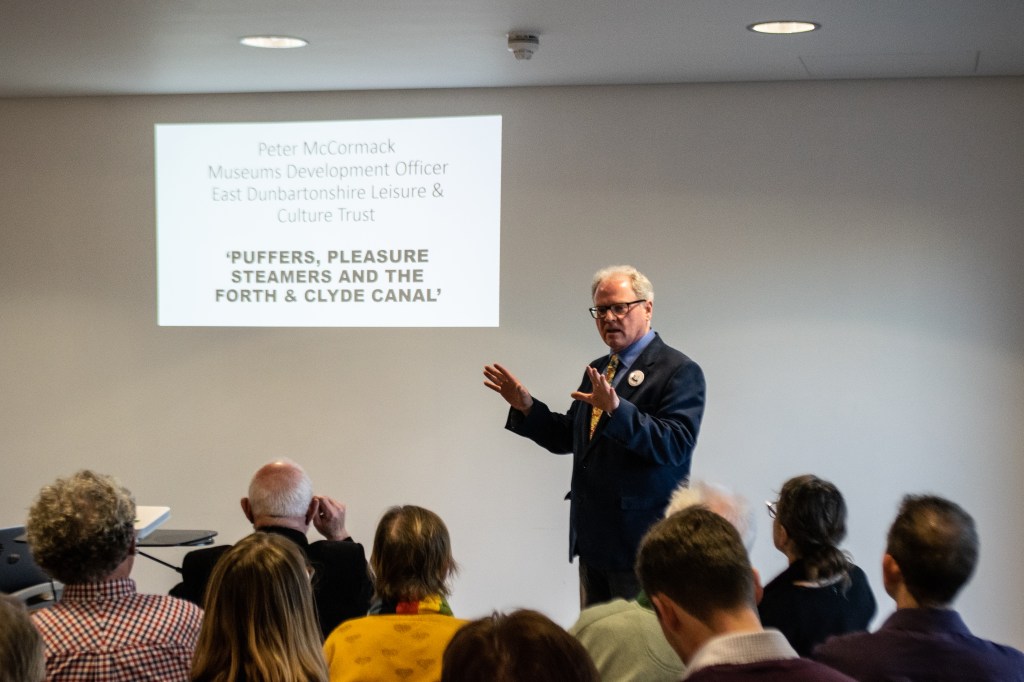
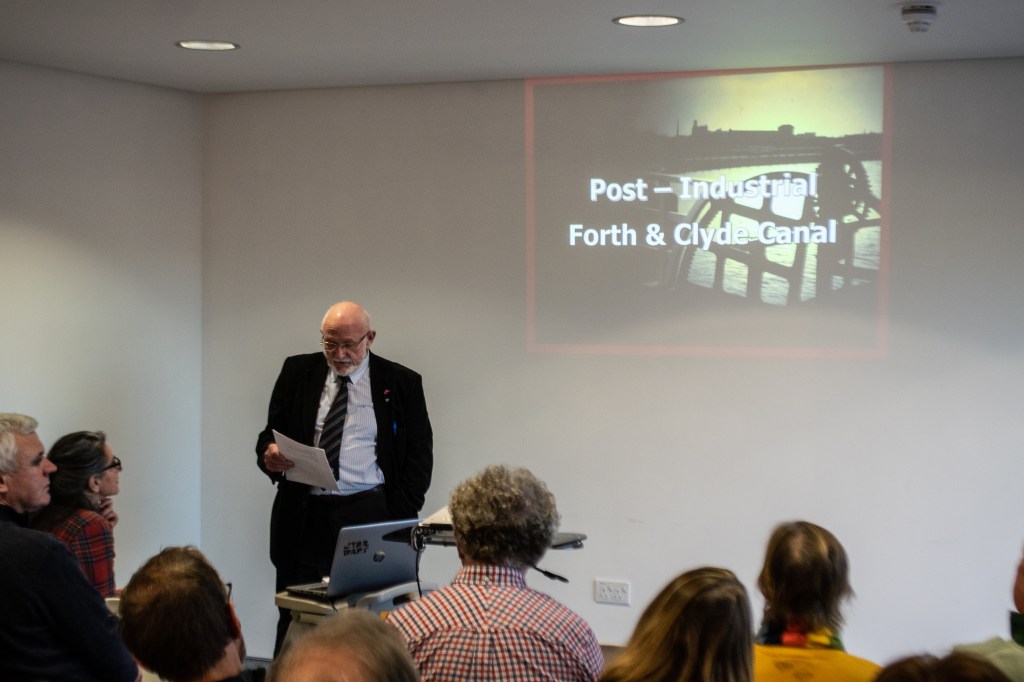
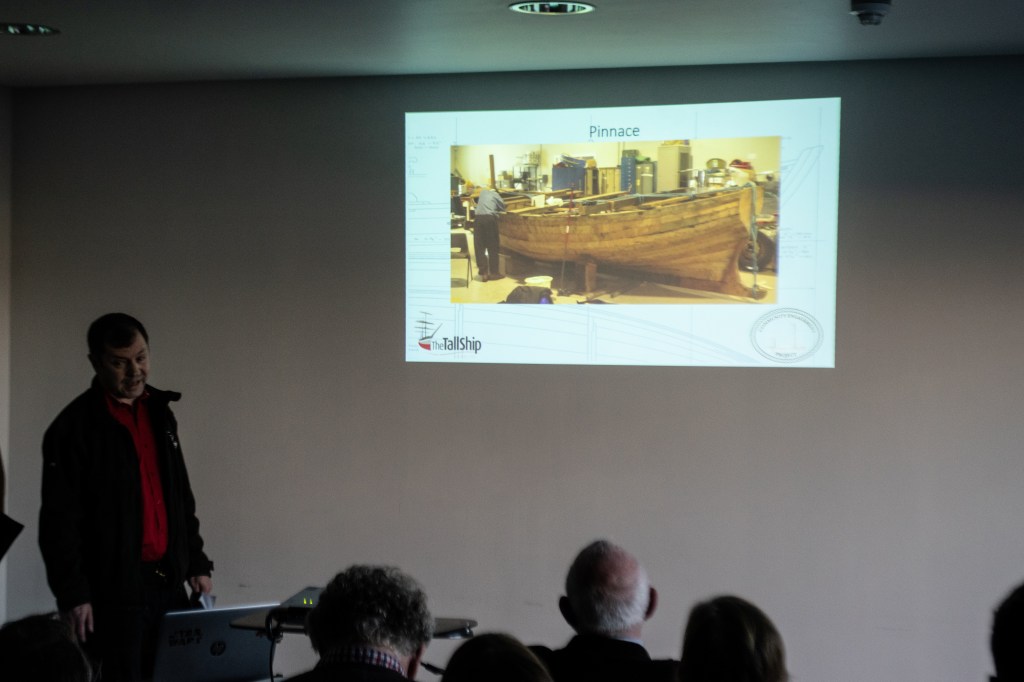
Photographs from left to right: Peter McCormack from the Auld Kirk Museum in Kirkintilloch, presenting collections related to the Forth and Clyde Canal. Tommy Lawton from the Scottish Waterways Trust/FCCS, presenting the history of the FCC.  Andy Aire, from Clyde Maritime Trust, the charity protecting The Tall Ship (Glenlee), presents The Tall Ship project and how it was one of the first cultural projects towards the regeneration of Glasgow, in the early 1990s.
Credit: Author's own.
 Livescape